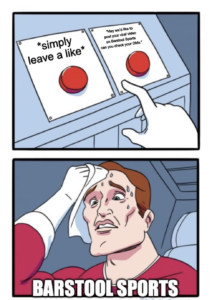
["simply leave a like & Hey we’d like to post your viral video to Barstool Sports can you check your DMs?"]
Oftentimes, small content creators or even the average Joe will post a video that begins to go viral. For instance, my friend Finn went to a celebrity basketball game and got one of the best angles of boxer Floyd Mayweather falling on the court. Finn posted this to TikTok and it started taking off. He had amassed almost 20 thousand likes in only a couple hours. He was then reached out to by ESPN who asked for his permission to use the video. After accepting, the Instagram account of ESPN posted the video and almost instantaneously, Finn’s virality halted. One of the key benefits of getting your content reposted to a large page is the possibility for more reach and exposure. Smaller pages often struggle to break through the noise and gain visibility in the vast landscape of the internet. When a larger page shares content from a smaller creator, it can significantly boost their audience and provide a platform for their work to be appreciated by a broader audience. In this way, reposting becomes a way for breakthroughs in online spaces.
However, in Finn’s case, this isn’t what happened. ESPN is a multi-million dollar corporation that is able to profit off of their social media following because of the work of smaller content creators. It raises questions about the ethical standpoint of large corporations in the digital age. Although these pages tag the smaller pages they get their content from, should they have to pay or fee or split a percentage of revenue with these creators? My choice for this meme was fairly simple. It depicts someone having to make a tough choice and these larger influencers have a choice between interacting with a meme/video on a small scale, or taking it a step further and reposting the meme and essentially claiming it as their own.

Leave a Reply